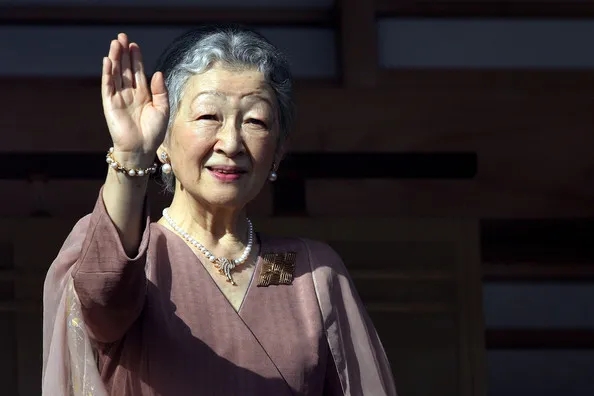
journalofserviceclimatology.org – Empress Emerita Michiko, born on October 20, 1934, as Michiko Shōda, is the wife of Emperor Emeritus Akihito and the mother of Emperor Naruhito. Throughout her life, she has had a profound impact on the Japanese imperial family, reshaping the traditional role of women within the monarchy and becoming a beloved figure for her warmth, humility, and dedication to her family and the Japanese people.
As the first commoner to marry into the Japanese imperial family in over a millennium, Michiko’s life story is one of both personal triumph and historical significance. Her journey from a private citizen to the Empress of Japan not only challenged traditional royal customs but also paved the way for greater modernity within the institution.
Early Life and Education
Michiko was born into a wealthy and respected family in Tokyo. Her father, Hidesaburo Shōda, was a successful businessman and the president of the Nisshin Flour Milling Company, which made Michiko a member of the prominent Shōda family. Growing up in a privileged environment, Michiko received an excellent education, studying at the prestigious Gakushuin School, which has traditionally educated members of Japan’s elite, including the imperial family.
Her early education was focused on literature and the arts, and she showed a particular interest in English. Michiko went on to attend the University of the Sacred Heart in Tokyo, where she majored in English literature. During her time at university, Michiko developed a deep love for literature and the humanities, which would later influence her role as Empress.
Unlike other members of the royal family, Michiko had the opportunity to experience life outside of the imperial bubble, providing her with a perspective that would influence her later work as Empress. Raised in a relatively modern and progressive family, she was more exposed to the outside world than previous generations of the imperial family, which often lived in seclusion and adhered strictly to imperial traditions.
Meeting and Marrying Emperor Akihito
Michiko’s life took a dramatic turn when she met Crown Prince Akihito in 1957. The two were introduced through a mutual acquaintance and soon developed a bond over their shared interests in literature and intellectual conversation. The relationship was a breakthrough for the imperial family: it was the first time in centuries that a commoner had been chosen as a consort for the heir to the throne.
Their courtship was heavily scrutinized by the public, and the couple’s marriage was considered a significant departure from centuries of tradition in the Japanese monarchy. The imperial family’s strict adherence to royal bloodlines meant that marriages had always been between members of noble or aristocratic families. Michiko, however, was not of noble birth, which made her union with Crown Prince Akihito a groundbreaking and controversial choice.
In 1959, after years of courtship, Michiko and Akihito announced their engagement, and their wedding, held in April 1959, was a momentous event. The public celebrated the marriage as a symbol of change and modernization for the Japanese imperial family. As the first commoner to marry a member of the imperial family, Michiko broke centuries-old traditions and opened the door for greater social integration and reform within the royal institution.
Becoming Empress and Redefining the Role of Women
When Akihito ascended the throne in 1989, Michiko became Empress of Japan, taking on the role of the first Empress of Japan to have been a commoner. Her ascension was not only historic but also transformative in many ways. As Empress, Michiko faced the challenge of balancing her traditional duties with her personal desire to modernize the monarchy and make it more accessible to the people.
One of her most significant contributions to the imperial family was her emphasis on the role of women. Prior to her marriage, women in the imperial family were often seen as symbolic figures, confined to ceremonial roles and lacking the agency that came with their male counterparts. However, as Empress, Michiko was instrumental in redefining this limited role, contributing to the modernization of the imperial family’s public image.
Michiko’s presence was often warm and accessible—an embodiment of modernity in contrast to the traditional, distant nature of the imperial family. She was known for her genuine interest in the people she met, whether it was during royal visits abroad or through her participation in charitable activities at home. Her commitment to engaging with the public humanized the monarchy and made it more relatable to ordinary citizens.
During her tenure as Empress, Michiko was also an advocate for women’s issues and took an active role in promoting education, health, and social welfare. She was deeply involved in a wide range of social causes, including organizations dedicated to child welfare, disaster relief, and mental health awareness. Her charitable endeavors, especially her focus on children’s issues and the welfare of women, earned her admiration both within Japan and abroad.
A Challenging Period: The Struggles of Motherhood
While Empress Michiko’s reign was largely marked by her public successes, her personal life, particularly her experiences as a mother, was more challenging. Michiko and Emperor Akihito struggled for several years to have children, and their first son, Crown Prince Naruhito, was born in 1960. The couple then faced the immense pressure of having another child, a male heir to the throne, which was a requirement under Japan’s imperial laws at the time.
However, Michiko was unable to bear a second son, leading to a public and private strain. The imperial family faced intense scrutiny over the lack of a male heir, as the succession laws at the time allowed only male descendants to inherit the throne. After many years, Michiko gave birth to a second child, Princess Sayako, in 1969. While there were hopes for a male heir, Michiko’s struggles to have another child underscored the pressures faced by royal women in Japan.
Despite these personal challenges, Michiko was a deeply devoted mother, and her close relationship with her children has been widely acknowledged. She and Emperor Akihito worked together to raise their children with a sense of responsibility and humility, and they have been instrumental in shaping the imperial family’s modern image.
Post-Reign Life and Legacy
In 2019, after her husband’s abdication, Michiko became Empress Emerita and continued her involvement in royal duties. Following her abdication, she has remained an active figure in Japan’s cultural and charitable circles, although her public appearances have become less frequent.
Empress Emerita Michiko’s legacy is one of profound change, empathy, and modernization. As a commoner who became Empress, she not only redefined the role of women in the imperial family but also helped transform the monarchy into a more relatable, compassionate institution. Through her work in social causes, her role as a mother, and her emphasis on the importance of human connection, Michiko left a lasting impact on the Japanese imperial family.
Her contributions to Japan’s modern history cannot be overstated—Empress Emerita Michiko played a crucial role in reshaping the monarchy into an institution that remains deeply intertwined with the people of Japan, transcending the traditions of the past to meet the challenges of the present and future.